)

Why AI search is rewriting the rules of hotel visibility
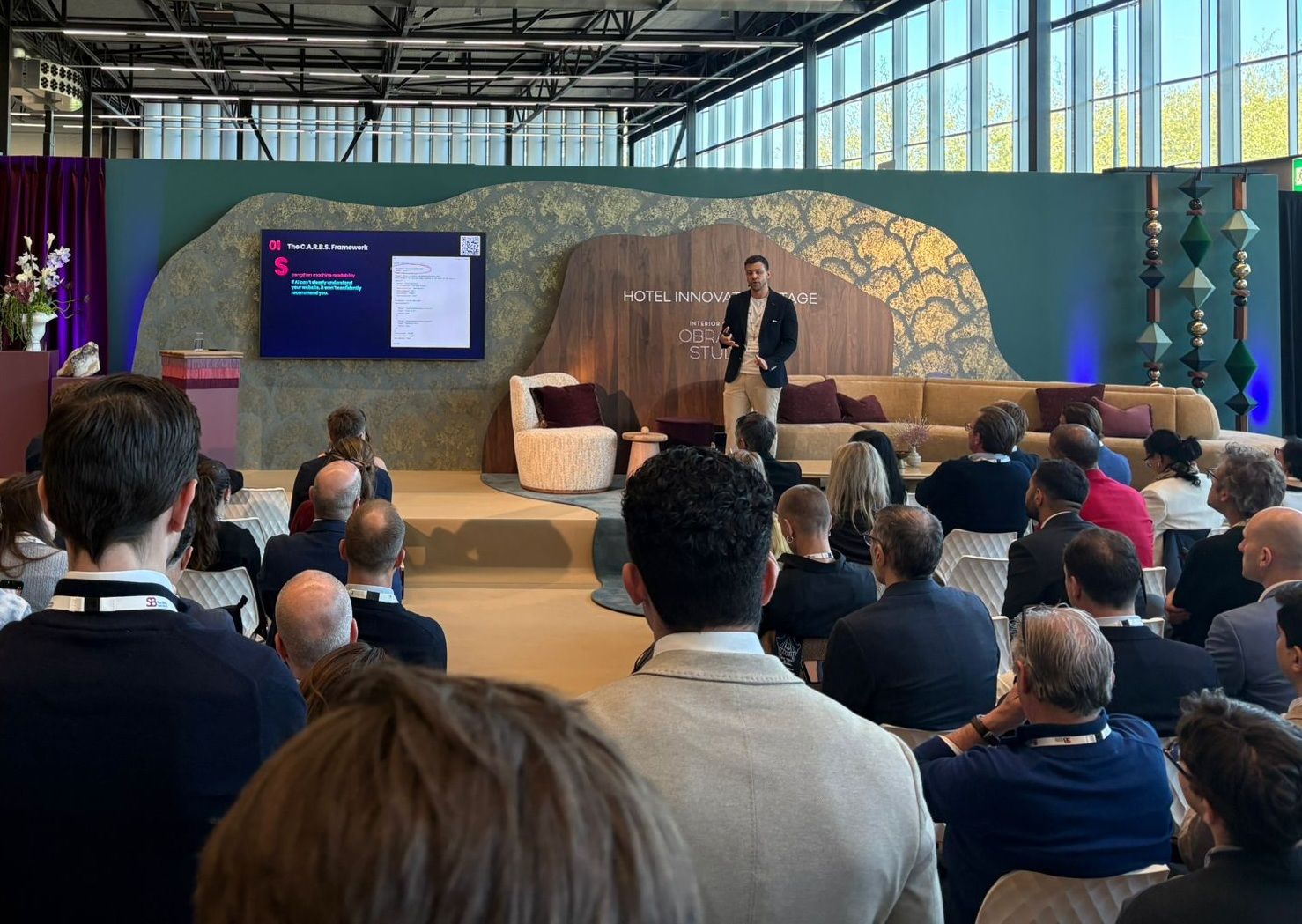
From zero-click searches to AI-generated brand perceptions, the way guests discover and choose hotels is undergoing a fundamental shift. At the Independent Hotel Show Amsterdam, Adam Hamadache, Founder & CEO of Formula, unpacked what this means in practice, outlining why visibility now depends less on website rankings and more on how effectively your hotel is understood, interpreted and recommended by AI.
At the Independent Hotel Show Amsterdam, Adam Hamadache’s session, How to Make Your Hotel Stand Out in AI Search, set out just how quickly the rules of digital visibility are changing for hotels, and why many traditional marketing approaches are already losing ground.
The central shift is behavioural. Search has evolved more in the past 18 months than in the previous 18 years, driven by the rise of AI-powered platforms and Google’s AI overviews. With around 60% of searches now resulting in zero clicks, and AI summaries reducing click-through rates even further, the long-held goal of ranking highly on Google and driving traffic to a hotel’s website is becoming less relevant. Instead, discovery and decision-making are increasingly happening within AI itself.
This has introduced the concept of the “AI shadow” – a machine-generated version of a hotel’s brand that potential guests encounter before ever reaching its website. Built from a combination of listings, reviews, press mentions and structured data, this shadow acts as a first impression, often determining whether a user clicks through at all. While it cannot be directly controlled, it can be shaped.
Consistency is a critical factor. AI systems cross-reference dozens of sources, and even minor discrepancies in a hotel’s name, address, positioning or messaging can reduce trust and limit recommendations. In parallel, review strategy has taken on new importance. AI interprets feedback differently to humans, identifying patterns rather than averages. A strong overall rating can be undermined by recurring negative comments, particularly if they go unanswered, whereas consistent, well-managed feedback builds credibility.
Hamadache also highlighted how AI presents information. Rather than promotional content, users are increasingly shown balanced summaries, including both strengths and weaknesses pulled directly from reviews. This makes reputation management not just a branding exercise, but a core driver of visibility.
To help hotels respond, he introduced the CARBS framework: Customer clarity, Authority mentions, Reviews, Brand consistency and Schema. Together, these elements provide a practical structure for improving how AI systems understand and recommend a property. Tactically, this includes clearer positioning, stronger third-party validation, consistent data across platforms, and improved technical foundations such as schema markup. FAQs were also flagged as an increasingly important tool, helping AI models interpret key information when embedded across multiple website pages rather than confined to a single section.
Looking ahead, the implications are significant. Industry forecasts suggest AI-driven search will overtake traditional search by 2028, fundamentally changing the customer journey. Hotel websites will still play a role, but later in the funnel, with lower traffic and higher intent. At the same time, OpenAI’s shift towards a “handoff” model – acting as a recommendation engine rather than a booking platform – offers some reassurance that direct bookings will remain viable, rather than being entirely absorbed by intermediaries.
The overarching message was clear: visibility is no longer just about websites and rankings. As AI becomes the primary interface between hotels and potential guests, success will depend on how effectively a brand is understood, interpreted and recommended by machines.
)
)
)
)
)
)
)
)

)
)
)
)
)
)
)
)
)
)
)
)
)
)
)
)
)
)
)
)
)