
Niek Eisen, General Manager, The July - Boat & Co
Can you tell us a little about your journey and what brought you to The July – Boat & Co?
Absolutely. I began studying hospitality about 14 years ago. What I loved was the combination of strategy and business with the opportunity to put ideas into practice in real time. I joined the company around 10 years ago as an intern, working on a short stay apartment project that has since closed as the business shifted its focus towards hotels. Since then, I 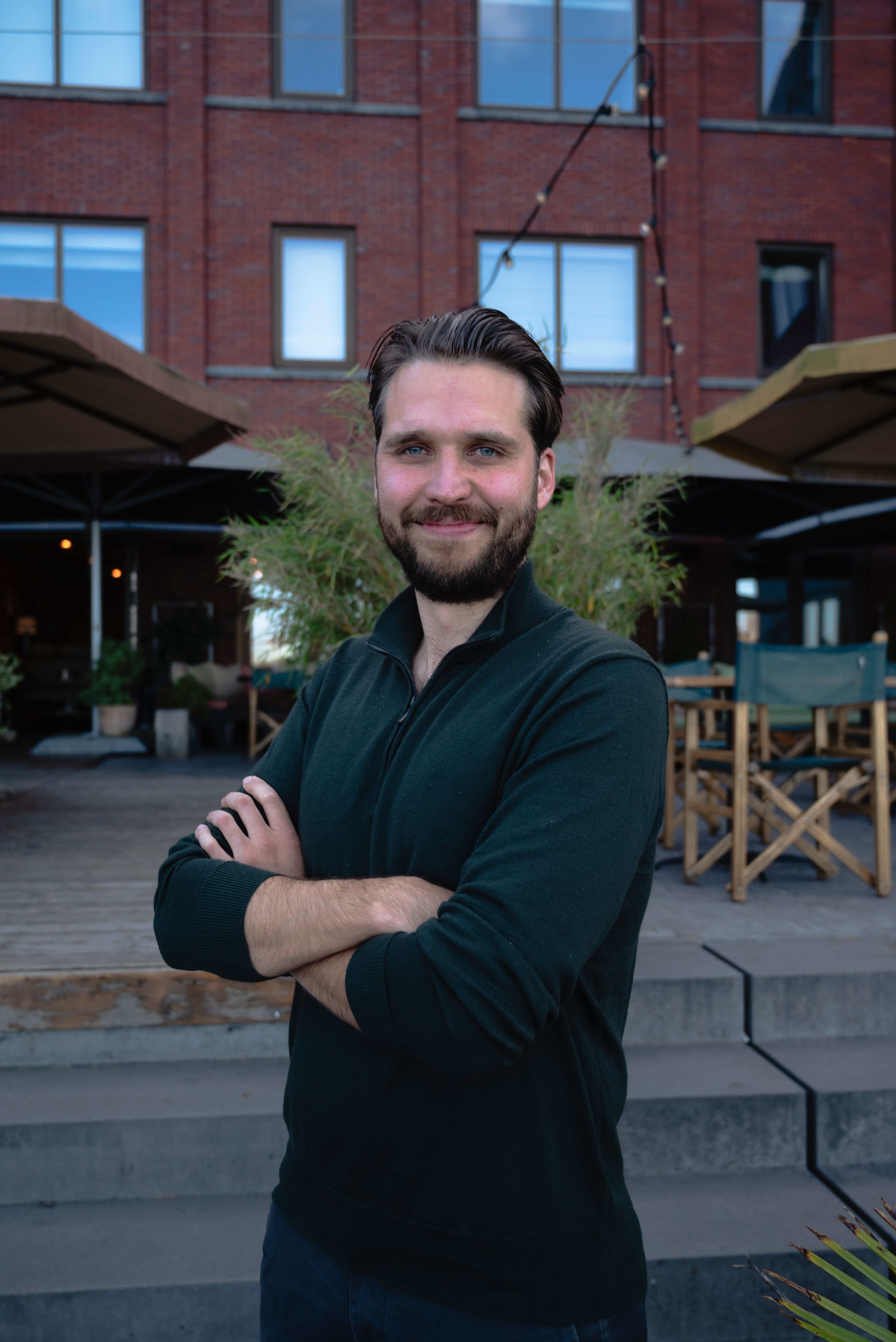 have worked across several locations and held a number of roles. I am now General Manager at The July - Boat & Co, and I am still just as intrigued by and happy with what we do every day.
What attracted you to the company 10 years ago, and what has kept you there?
What drew me in was the sense that the company was doing things differently. I met the team at a careers fair where all the big hotel chains were represented. They looked impressive, but this company stood out because its story, product, atmosphere and culture felt different. I immediately felt that you could make a difference from any role. Even as an intern, if you had a good idea, it could be put into practice. Although we are growing, that is still the culture we work hard to maintain. We may be a hotel group, but entrepreneurship remains part of our DNA. Opportunities to develop came along as the company grew, and I grew with it. That journey has brought me to where I am today.
How has the location influenced the identity and design of the hotel?
The hotel has been open for around seven years and sits within a newly developed area of Amsterdam called the Houthavens. Historically, this was a dockyard and an important arrival and distribution point for timber entering the Netherlands before travelling elsewhere in the country and across Europe. When we developed the plans for the hotel, we made a commitment to the neighbourhood that it would also serve as a social hub. As this is a new residential area, we felt we could play an important role in helping people feel at home here.
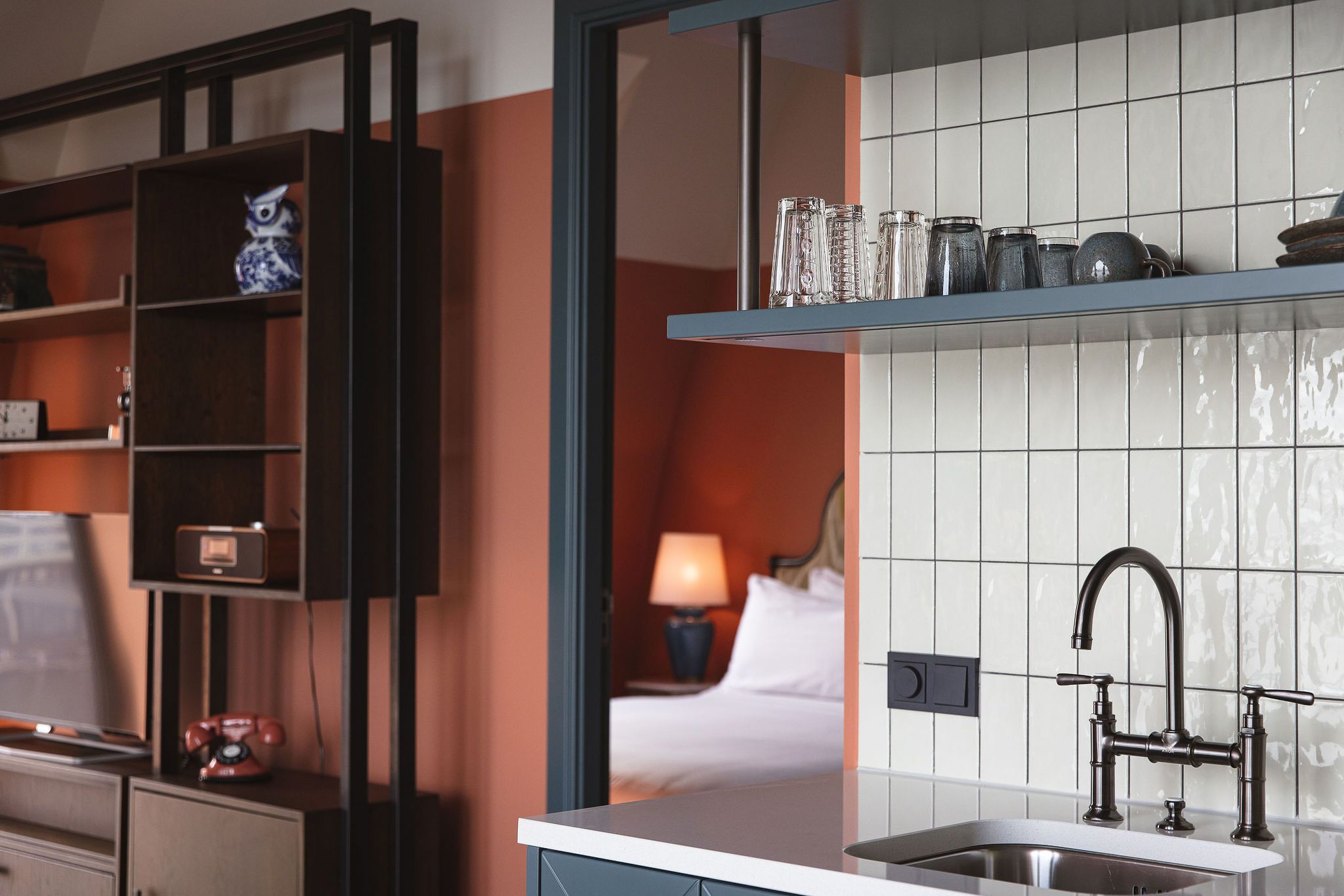
We are not a hotel that focuses on mass tourism and simply directs guests towards Amsterdam's main attractions. Our guests actively seek a local experience and something beyond the standard guidebook itinerary. That thinking is reflected in the design. As an aparthotel, we welcome guests who often stay for longer periods, so our spaces are designed to feel like home while also acknowledging the area's industrial history.
The public areas are equally important. We created a living room space around the fireplace where people can enjoy a coffee, as well as a communal work table that many neighbours use throughout the day to work or meet business contacts.
Do many local people use the hotel to work and socialise?
Yes, very many. I would say around 80 per cent of the guests at Vessel, our restaurant, are local. They might come in for breakfast, work here or meet someone for business, and then stay for something to eat in the evening. For us, that is the ideal food and beverage guest journey.
What is the hotel's approach to sustainability?
Sustainability is extremely important to us. We proudly display our Green Globe and BREEAM certifications at the front desk, and we try to embed sustainability into our operations and decision making. The building was developed to modern standards, so we do not use gas. We have 420 solar panels on the roof and use district heating and cooling. The heating comes from a nearby waste incineration plant, while cooling is drawn from the cold water of the IJ. 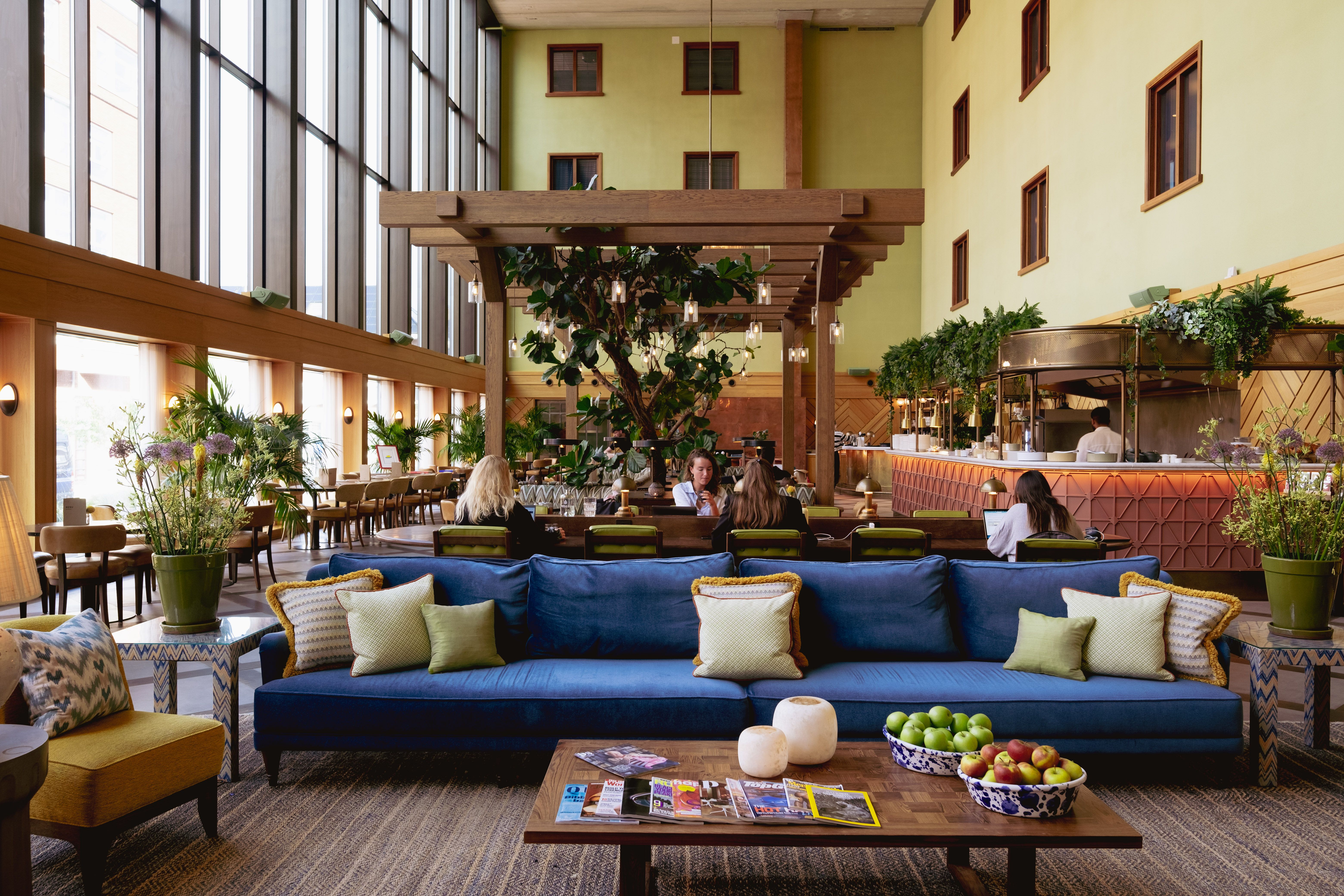
We continue to improve the systems within the building. We recently introduced an artificial intelligence tool that manages our building management system. It analyses weather forecasts and guest behaviour to help us heat and cool the property as efficiently as possible. We have also adapted our ventilation and extraction systems so they operate according to demand. Lasers monitor kitchen extraction, while carbon dioxide sensors manage extraction in the public areas. This means we only use energy when it is needed instead of bringing warm or cool air into the building and immediately extracting it.
Sustainability also has a social dimension. Our relationship with the neighbourhood matters, as does the wellbeing of our team. Every member of staff has the opportunity to take a community day once a year to support a good cause, preferably in the local area. It gives people a sense of connection and purpose in their work.
As General Manager, what does your day look like and what do you enjoy most about the role?
Every day is different, and the hotel is incredibly dynamic. That is true for everyone, including our front desk team. Our spaces are used in many ways. External guests can book yoga classes in the gym, we host events, and we welcome many different types of visitors with a wide range of requests.
There are regular responsibilities, of course. At the beginning of each month, for example, we review performance. But within one week I might taste new menus, lead a tour for a prospective client and make decisions about strategy. That variety is what I love most about the job.
How do you build a strong team culture across the hotel?
 It begins with selecting people who connect with our concept and brand. We describe our approach as freedom within a framework. We have a broad way of working that reflects how we want guests to experience our service, but we trust our team to bring it to life authentically.
That approach is supported by training and an extensive onboarding process that balances information and instruction with enjoyment. It is also about creating an atmosphere where people feel at home and genuinely want to spend time. We often see team members here even when they are not working because they feel comfortable in the space. That sense of belonging is the foundation on which we build our teams.
What do you look for when recruiting new team members?
Authenticity is very important. I often describe our service style as appropriately informal. Our guests value genuine connections rather than scripted conversations, so we look for people who understand that approach and can bring it naturally into their work.
How have guest expectations changed in recent years? 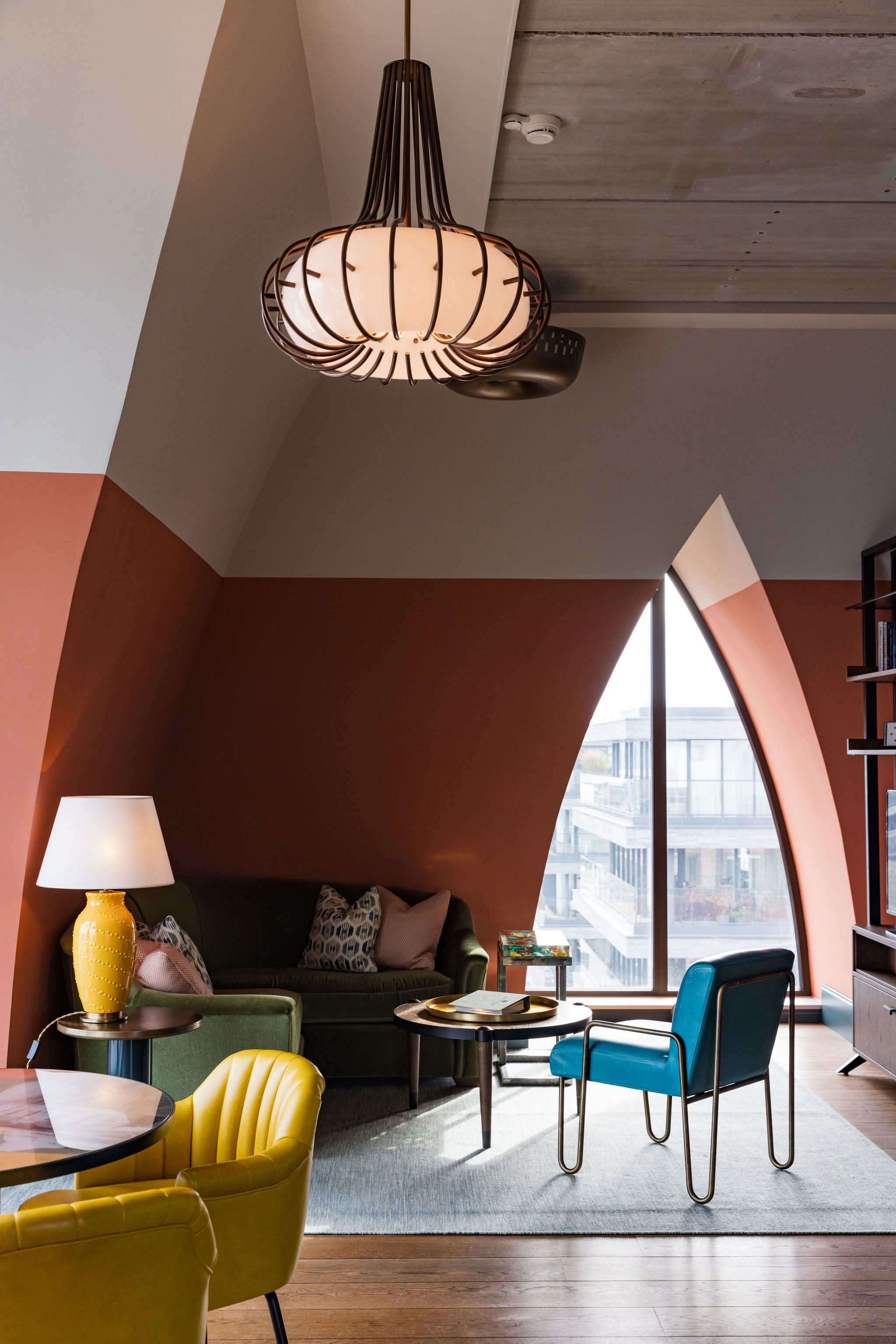
Prices are rising, and expectations rise with them. We therefore need to keep adapting and make sure we deliver genuine value. That value can be physical, such as the design of a room or the amenities provided, but it also comes from listening to guests, responding to their individual needs and recognising the person in front of us. Expectations are certainly increasing, particularly as prices in Amsterdam continue to rise.
Have you noticed a change in how Amsterdam residents view tourism?
There is certainly a negative perception of tourism among some Amsterdam residents. If you search for hotel or tourism news, you often see terms such as overtourism. I am not saying those concerns are unfounded, but the conversation can sometimes feel too narrow. What Amsterdam needs is more respectful tourism and visitors who want to experience the city beyond its most familiar attractions. Those attractions are part of Amsterdam, of course, but our guests tend to look for somewhere quieter that is still close to the centre. They want a more local experience and generally engage with the city in a respectful way.
Looking ahead, what are you most excited about for The July - Boat & Co and Dutch hospitality?
We are opening a new location in the Zuidas, which will be our largest hotel, and I am very excited to see it come to life. It will have 240 rooms and will be located near the RAI. The opportunity is to translate the concept we have developed here into a faster paced setting. We can retain our standards of comfort and space while welcoming more groups and delivering a busier style of hospitality, with personalisation still at its core. That is the big development I am most looking forward to.


)


)
)
)
)

)
)
)
)


)
